
Invoice Discounting vs. Traditional Bank Loans: Which is Better for Your MSME in 2026?
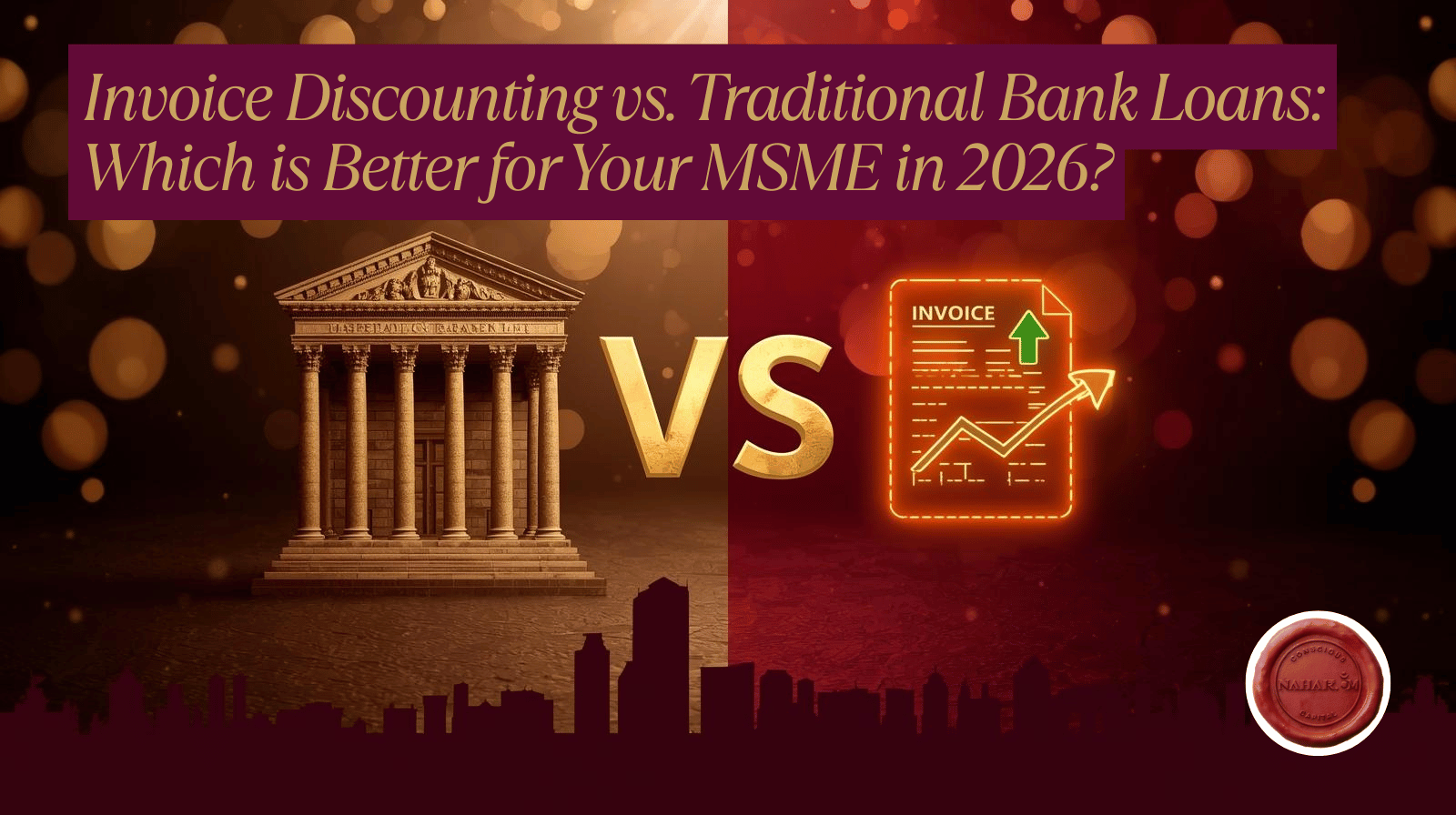
invoice discounting vs bank loans MSME financing comparison working capital solutions India

Bank loans feel like the safe choice for MSME working capital — but safe is not always right. If your cash flow gap is caused by a 60-day wait on a corporate invoice, you are solving a timing problem with a structure-building tool. This guide compares invoice discounting and traditional bank loans (CC/OD) across the five factors that matter most: basis of lending, disbursal speed, collateral requirements, true cost of capital, and flexibility. You will find a head-to-head breakdown of both instruments, a scenario guide for when each is the better choice, a full comparison table built for quick reference, and answers to the three questions MSME owners ask most. The verdict: they are not rivals. The right strategy uses both — and this post tells you exactly when to use which.
How Invoice Discounting Works in India

how invoice discounting works in India process steps MSME financing and cash flow management

Invoice discounting helps MSMEs in India convert unpaid invoices into immediate working capital without waiting 30–90 days for buyer payments. This step-by-step guide explains exactly how the invoice discounting process works — from raising and verifying invoices to platform onboarding, buyer verification, fund disbursal, and final settlement. Learn how TReDS and fintech platforms enable faster cash flow, what documents are required, how approval decisions are made, and how businesses receive up to 90% of invoice value within 24–72 hours. Whether you’re exploring invoice financing for the first time or looking to streamline your working capital cycle, this guide breaks down the complete workflow in clear, practical terms.