Ghost SIMs and PoS Agents: Exposing the Hidden Backend of India’s Cyber Fraud Network
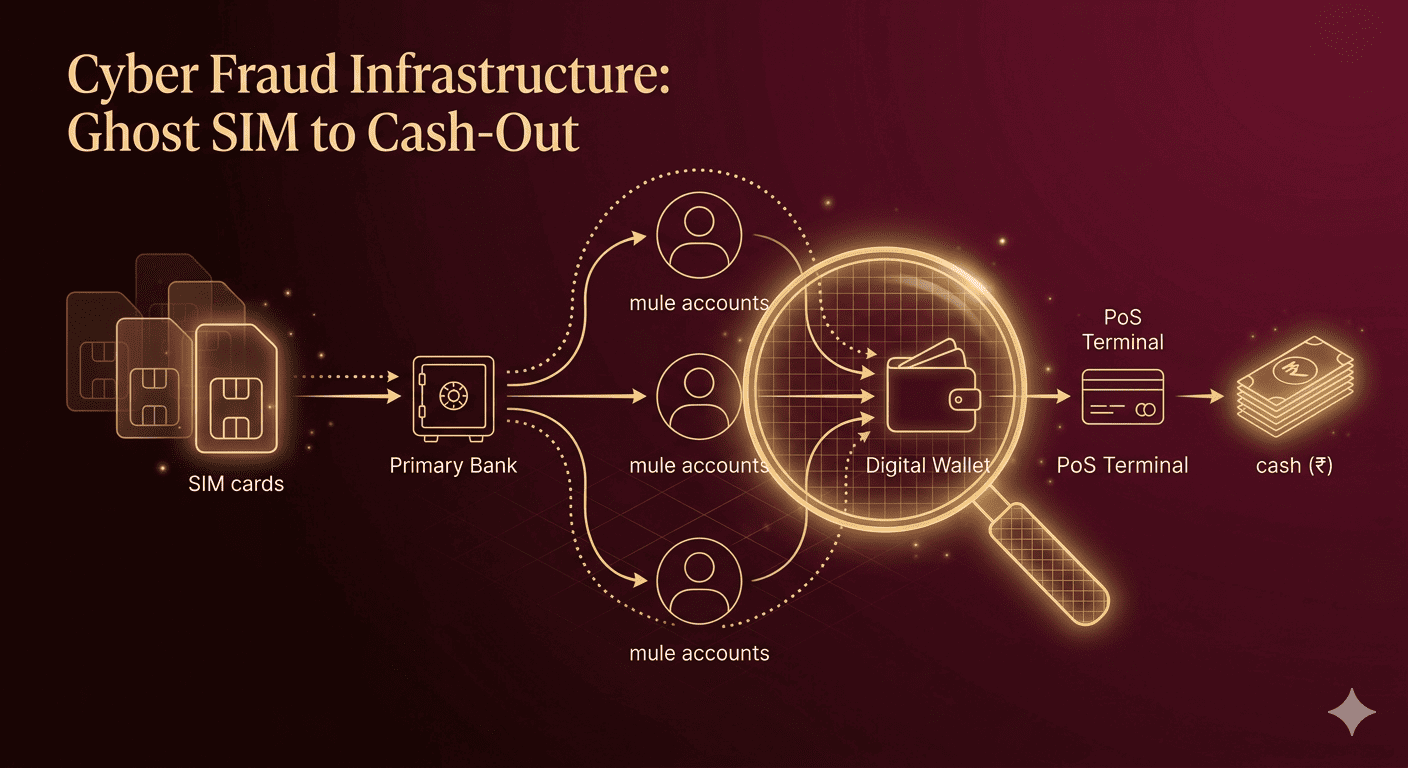
Ghost SIMs to cash-out cyber fraud flow showing SIM cards, mule accounts, digital wallet, PoS terminal and cash extraction in India

Ghost SIMs and rogue PoS agents form the invisible backbone of India’s cyber fraud ecosystem. This visual breakdown explains how stolen KYC data is used to issue ghost SIMs, activate mule bank accounts, route funds through digital wallets, and ultimately cash out via PoS terminals. It offers a clear, end-to-end view of how organised fraud networks operate behind the scenes.
Digital Arrest Scams in India 2026: How Southeast Asia Networks Target You — and How to Fight Back

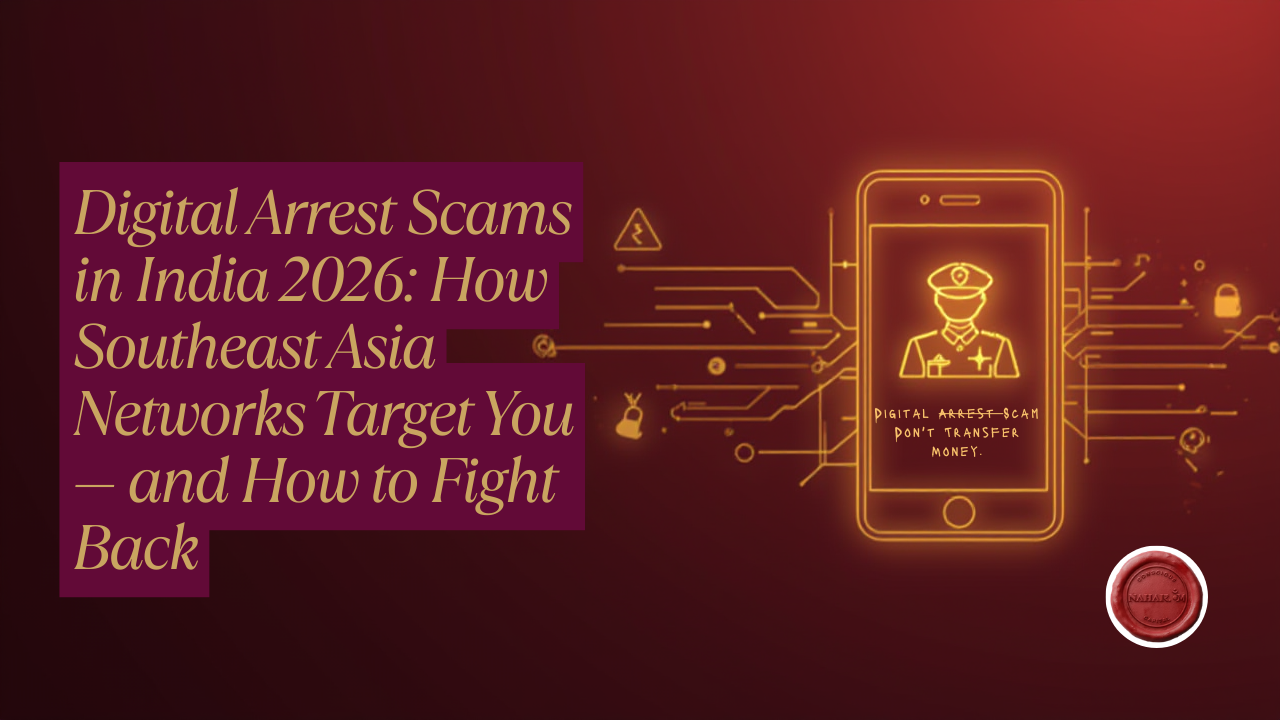
Digital arrest scam in India illustration showing fake police officer video call and cyber fraud warning not to transfer money

Digital arrest scams are India’s fastest-growing cyber fraud, where criminals impersonate law enforcement officials to extort money through video calls. This guide breaks down how these scams operate, their links to Southeast Asian networks, and the exact steps you need to protect yourself and your family.

Pre-IPO Assets in Southeast Asia: MAS and VSIP Corridors Explained

Pre-ipo assets: A sophisticated blog thumbnail graphic illustrating pre-IPO investment flows in Southeast Asia, featuring the MAS corridor in Singapore and the VSIP corridor connecting Vietnam and Singapore.

Southeast Asia has become a global hotspot for pre-IPO investing, driven by rapid digital adoption, a booming startup ecosystem, and strategic government initiatives. This guide explores two critical corridors shaping the region’s private markets: Singapore’s MAS-regulated financial ecosystem offering secure, structured access to high-growth companies, and the VSIP corridor bridging Vietnam’s industrial expansion with Singaporean capital and expertise. Learn how global investors can navigate these frameworks, understand the risks and rewards, and position themselves for the next wave of ASEAN public listings.

European Pre-IPO Markets: SeedBlink and ESTV for Global Investors

A comparison graphic or logo collage featuring SeedBlink and ESTV, representing European pre-IPO investment platforms for global investors.

“This graphic introduces two of Europe’s leading platforms for pre-IPO investing: SeedBlink and ESTV.

As the European startup ecosystem matures, opportunities for global investors are expanding beyond traditional venture capital. SeedBlink acts as a primary market platform, allowing both retail and accredited investors to participate in early-stage funding rounds for vetted tech startups across the EU.

In contrast, ESTV (European Secondary Trading Venue) addresses the critical need for liquidity by functioning as a secondary market. Here, existing shareholders—such as early employees or angel investors—can sell their stakes to new investors before a company goes public.

Together, these platforms represent a more accessible and transparent way for international investors to gain exposure to European innovation in sectors like fintech, AI, and climate tech, while navigating the EU’s robust regulatory framework.”

Cybercrime NGOs in India: How They Support Fraud Victims

A conceptual illustration or infographic showing support for cybercrime victims in India, featuring symbols of digital security and cybercrime NGOs in India assistance.

India is facing a cybercrime epidemic. From UPI scams to crypto fraud, millions are affected—but the path to justice is often confusing and slow. While government portals are essential, they can’t do it alone. This guide explores the crucial role of cybercrime NGOs in India, exploring how organizations like CyberPeace Foundation step in to provide legal aid, emotional support, and hands-on guidance to fraud victims when they need it most.

Invoice Discounting vs. Traditional Bank Loans: Which is Better for Your MSME in 2026?

invoice discounting vs bank loans MSME financing comparison working capital solutions India

Bank loans feel like the safe choice for MSME working capital — but safe is not always right. If your cash flow gap is caused by a 60-day wait on a corporate invoice, you are solving a timing problem with a structure-building tool. This guide compares invoice discounting and traditional bank loans (CC/OD) across the five factors that matter most: basis of lending, disbursal speed, collateral requirements, true cost of capital, and flexibility. You will find a head-to-head breakdown of both instruments, a scenario guide for when each is the better choice, a full comparison table built for quick reference, and answers to the three questions MSME owners ask most. The verdict: they are not rivals. The right strategy uses both — and this post tells you exactly when to use which.

How Invoice Discounting Works in India

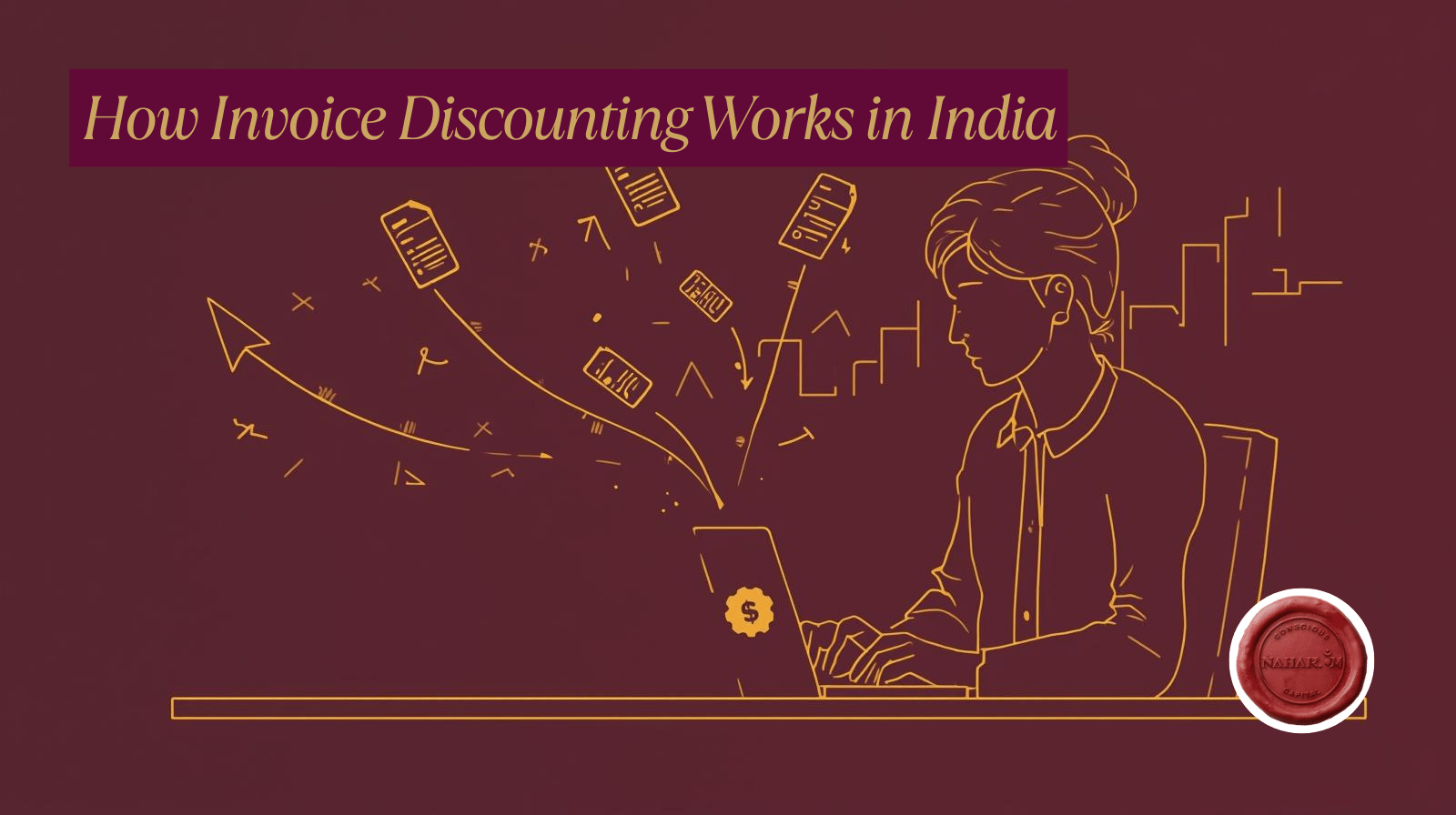
how invoice discounting works in India process steps MSME financing and cash flow management

Invoice discounting helps MSMEs in India convert unpaid invoices into immediate working capital without waiting 30–90 days for buyer payments. This step-by-step guide explains exactly how the invoice discounting process works — from raising and verifying invoices to platform onboarding, buyer verification, fund disbursal, and final settlement. Learn how TReDS and fintech platforms enable faster cash flow, what documents are required, how approval decisions are made, and how businesses receive up to 90% of invoice value within 24–72 hours. Whether you’re exploring invoice financing for the first time or looking to streamline your working capital cycle, this guide breaks down the complete workflow in clear, practical terms.

Ultimate Guide to Invoice Discounting in India

Invoice discounting process illustration showing digital invoices converting into cash flow through secure financing in India

Struggling with delayed payments? This complete guide to invoice discounting in India (2026) explains how businesses convert unpaid invoices into instant working capital. Learn eligibility, rates, process, risks, and how non-dilutive financing helps MSMEs and startups maintain cash flow without taking traditional loans.